Most businesses pick a web development agency the way they'd pick a restaurant — a nice-looking portfolio, a decent price, maybe a referral. Then three months in, they're stuck with a half-finished project, a developer who's gone quiet, and a bill that's somehow doubled.
Here's what actually separates a good agency from a risky one, and the questions most agencies hope you never ask.
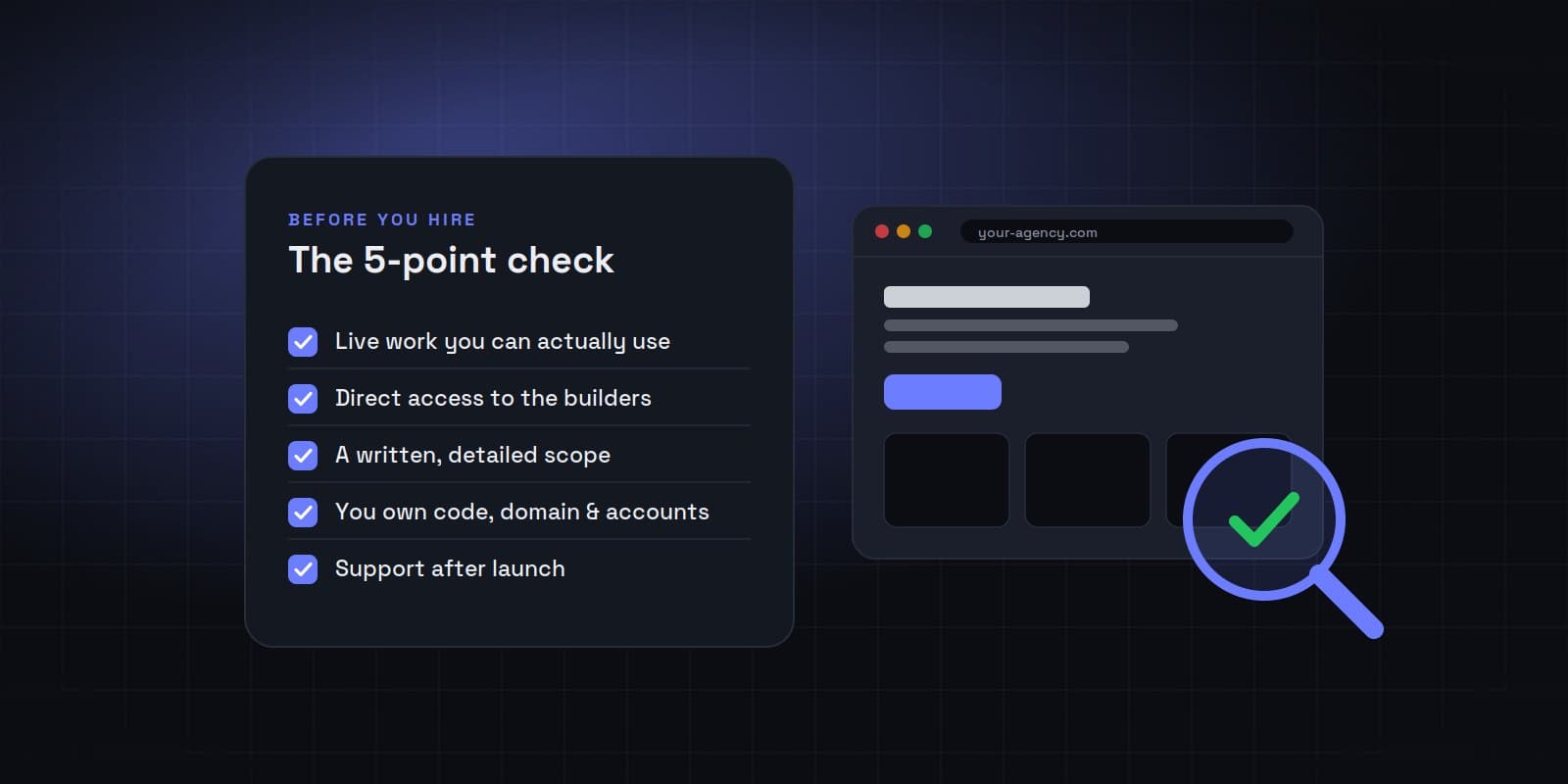
The first thing to check is who's actually building it. Many agencies sell you on a senior developer in the pitch call, then hand your project to a junior, or worse, a subcontractor they've never worked with before. Ask directly who will be writing the code, and whether you'll have direct contact with them. If the answer is vague, that's your answer.
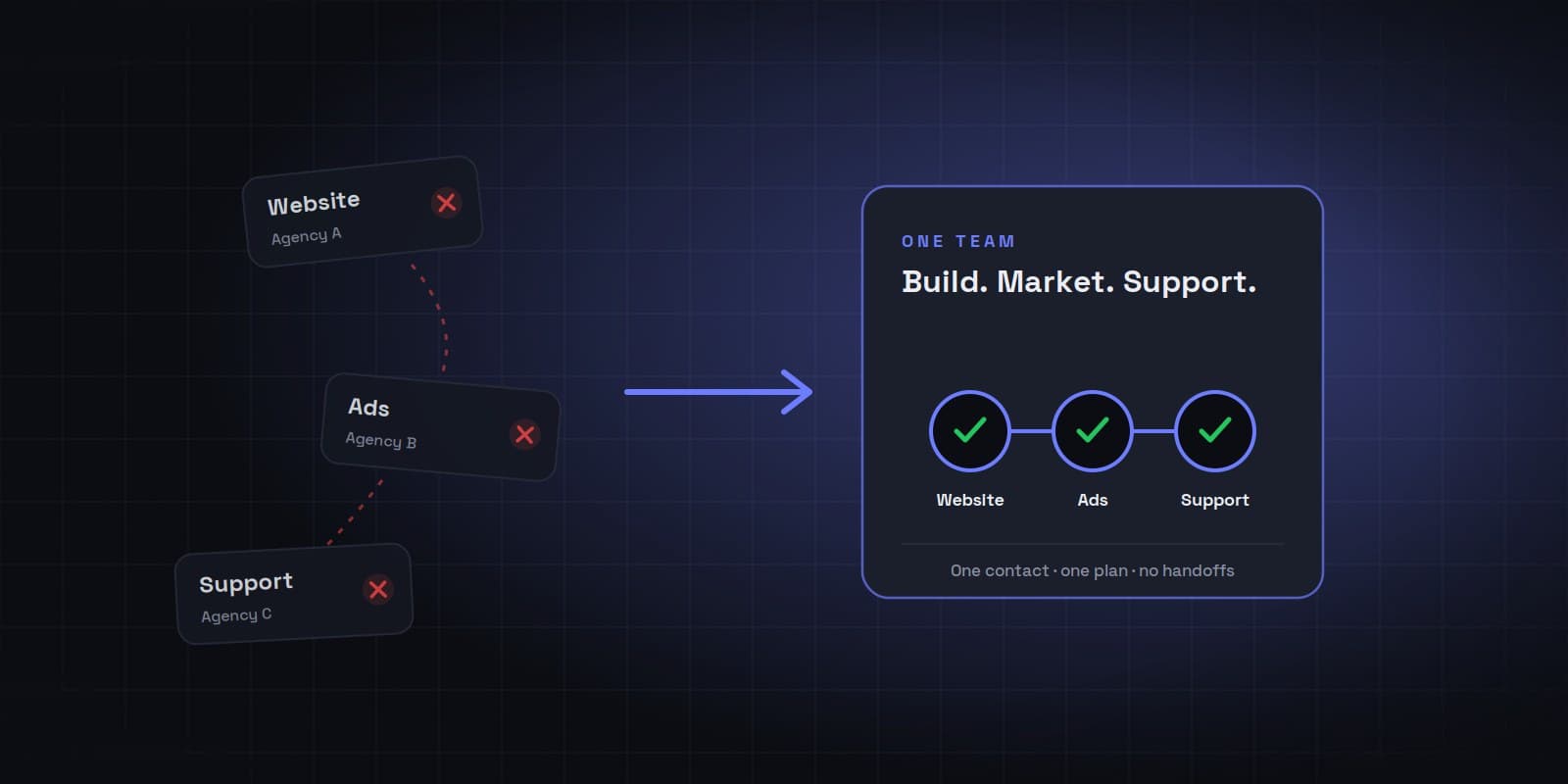
The second is what happens after handoffs. Design, development, and marketing are often three different teams, sometimes three different companies. Every handoff is a place where context gets lost, timelines slip, and nobody quite owns the outcome. Ask how many people or teams will touch your project end to end.
The third is whether the quote is itemized or one big number. A single lump-sum quote hides a lot. Ask for a breakdown of design, development, testing, deployment, and critically, what's not included, like hosting, maintenance, or content writing. Scope creep starts exactly where the quote gets vague.
The fourth is whether you can actually see their real work, not just screenshots. Screenshots can be staged or borrowed. Ask for live links to real, running projects you can click through yourself, ideally with real users behind them, not demo data.
The fifth is what support looks like after launch. Launch day isn't the finish line, it's the start of the part that actually matters. Ask what happens when something breaks in month three: is there a maintenance plan, a support SLA, or are you back to square one hunting for whoever built it?
At Techlonicx, we handle all of this under one roof: the same team from design through post-launch support, itemized scoping before you commit, and every portfolio piece is a real, live product you can click through yourself.